A small practice,
built around one idea.
Therapy should reflect the person sitting in the room. Not the diagnosis, not the manual — the person. Everything at Tranquil Leaf follows from that.

The room came first.
Most people who walk into therapy have already tried to handle it alone for a long time. Months, usually. Sometimes years. By the time they reach out, they've often rehearsed the conversation so many times that saying it out loud feels anticlimactic — and then they apologise for taking up the hour.
Tranquil Leaf started from a fairly simple observation: that the setting shapes what people are willing to say. A conversation that feels institutional produces institutional answers. A space that feels like somewhere you'd actually choose to be produces something closer to the truth. So the approach was designed before the website, before the branding, before any of the rest of it.
The name comes from the same place. A leaf is a small thing, and it grows without being forced to. That's roughly how the work goes: unhurried, in the direction the person is already leaning, with the therapy adapting to fit rather than the other way around.
Fifteen years of clinical practice have made one thing clear — there is no single approach that works for everyone. What works is paying close attention to who is in front of you, and having enough tools on the table to actually respond to what you find.
 Licensed in Pennsylvania
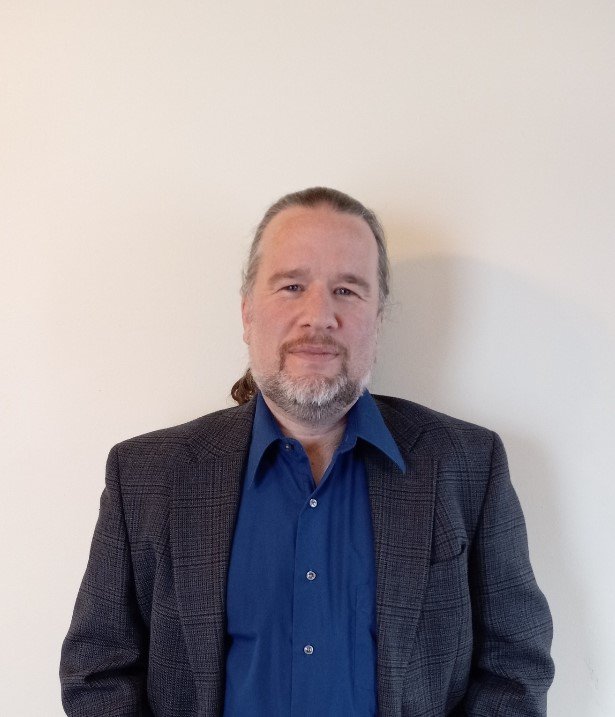
Zachary Maichuk, PsyD
Licensed Clinical PsychologistFifteen years working across a genuinely wide range — anxiety, ADHD, and depression through chronic stress, trauma, and more complex presentations including schizophrenia and borderline personality disorder.
His training is integrative by design. Cognitive behavioral therapy where structure helps, mindfulness-based work where the nervous system needs settling first, solution-focused methods when momentum matters, and psychodynamic and psychoanalytic work when the same pattern keeps returning and nobody has asked why. The technique gets matched to the client — never the reverse.
- Doctorate
- Rutgers University — Graduate School of Applied & Professional Psychology
- Licensure
- Licensed Clinical Psychologist, Commonwealth of Pennsylvania
- Credential
- PSYPACT / Authority to Practice Interjurisdictional Telepsychology (APIT)
- Experience
- 15 years in clinical practice
- Clients
- 16+ · Telehealth only
Fifteen years, in short.
A brief account of the training and clinical work that shaped how this practice runs.
Rutgers GSAPP
Doctorate in Clinical Psychology from the Graduate School of Applied and Professional Psychology — a programme built around the scientist-practitioner model, where clinical hours run alongside the research from day one.
Community & acute settings
Early practice across community mental health and higher-acuity settings, working with severe and persistent mental illness including schizophrenia and complex trauma presentations. The clinical range built here still shapes the work.
Toward an integrative approach
Rather than specialising into a single school, the practice moved deliberately in the other direction — accumulating CBT, DBT, MBCT, solution-focused, existential, and psychoanalytic training so the response could be matched to the person rather than the other way round.
Tranquil Leaf Mental Health PLLC
An independent practice serving Pennsylvania — and, under PSYPACT/APIT, additional participating states — entirely by telehealth. Deliberately small — a manageable caseload means every client gets the same clinician, consistently, for as long as the work takes.
Four things that don't flex.
Everything else about the work adapts. These don't.
You set the pace
Nothing gets opened that we can't close again before the hour is up. You decide what's discussed and when — including deciding that today isn't the day for it.
No judgement in the room
Whatever brought you here has almost certainly been said before, by someone who was equally sure they were the exception. They weren't, and neither are you.
Honesty about progress
If something isn't working, we say so and change it. Therapy that drifts along without direction helps nobody, and you shouldn't have to be the one to raise it.
Fit over retention
If someone else would serve you better, you'll get their name. Fit predicts outcome more reliably than almost anything else, so it's not a difficult conversation to have.
The four-legged colleagues.
Not licensed. Not certified. Somehow still very good at the job.
Sun Wukong, PurrhD
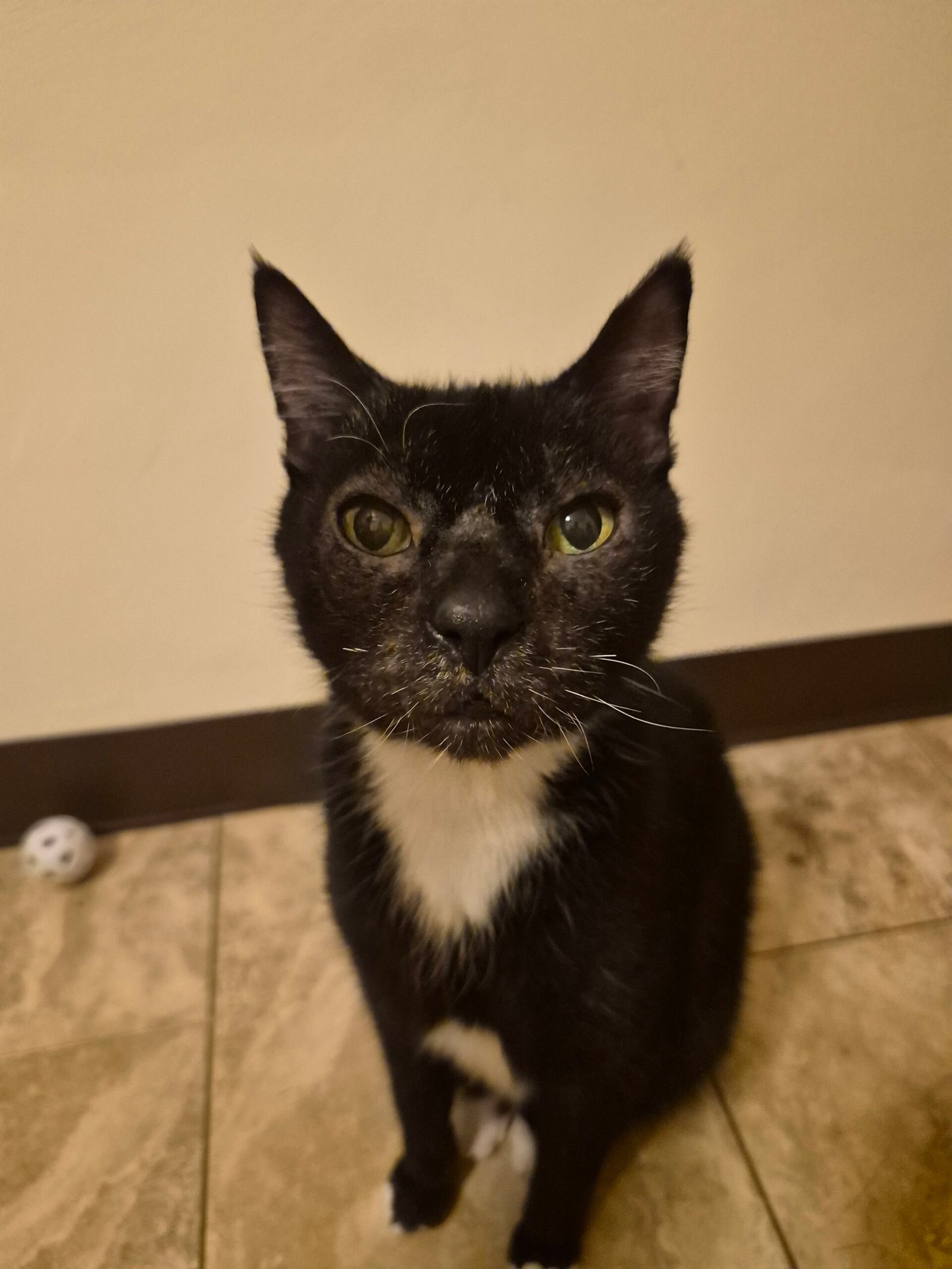
Senior Feline Therapist · "Sun-Sun"A telehealth co-therapist since 2020, now semi-retired but still dropping into sessions. Specializes in Catmitment and Acceptance Therapy, and gets his Zen on whenever the chance arises.
Indie Bean, LCatSW
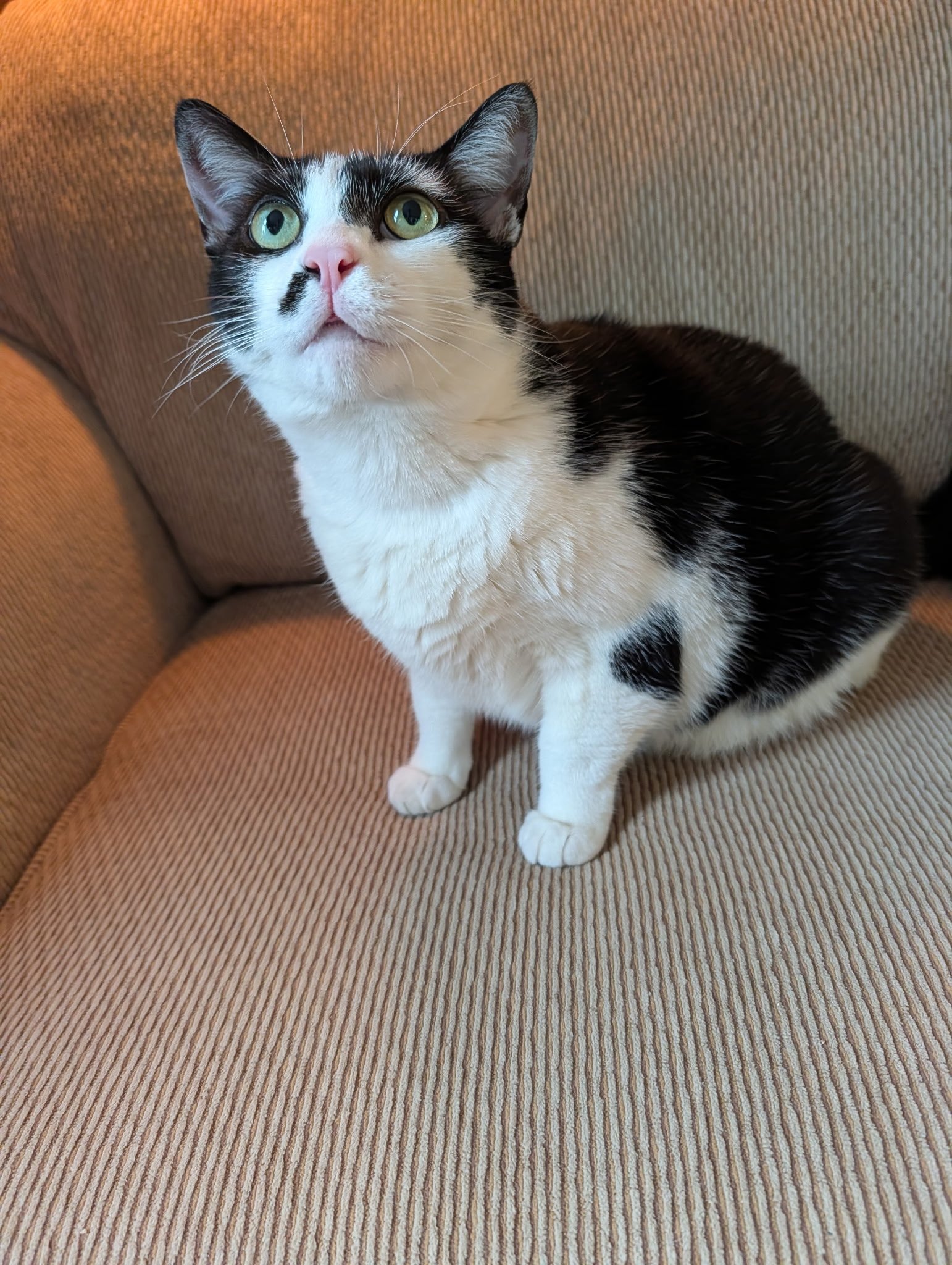
Office ManagerHolds a supervisory seat at the back window for most of the working day, from which she keeps the rest of the co-therapists in line.
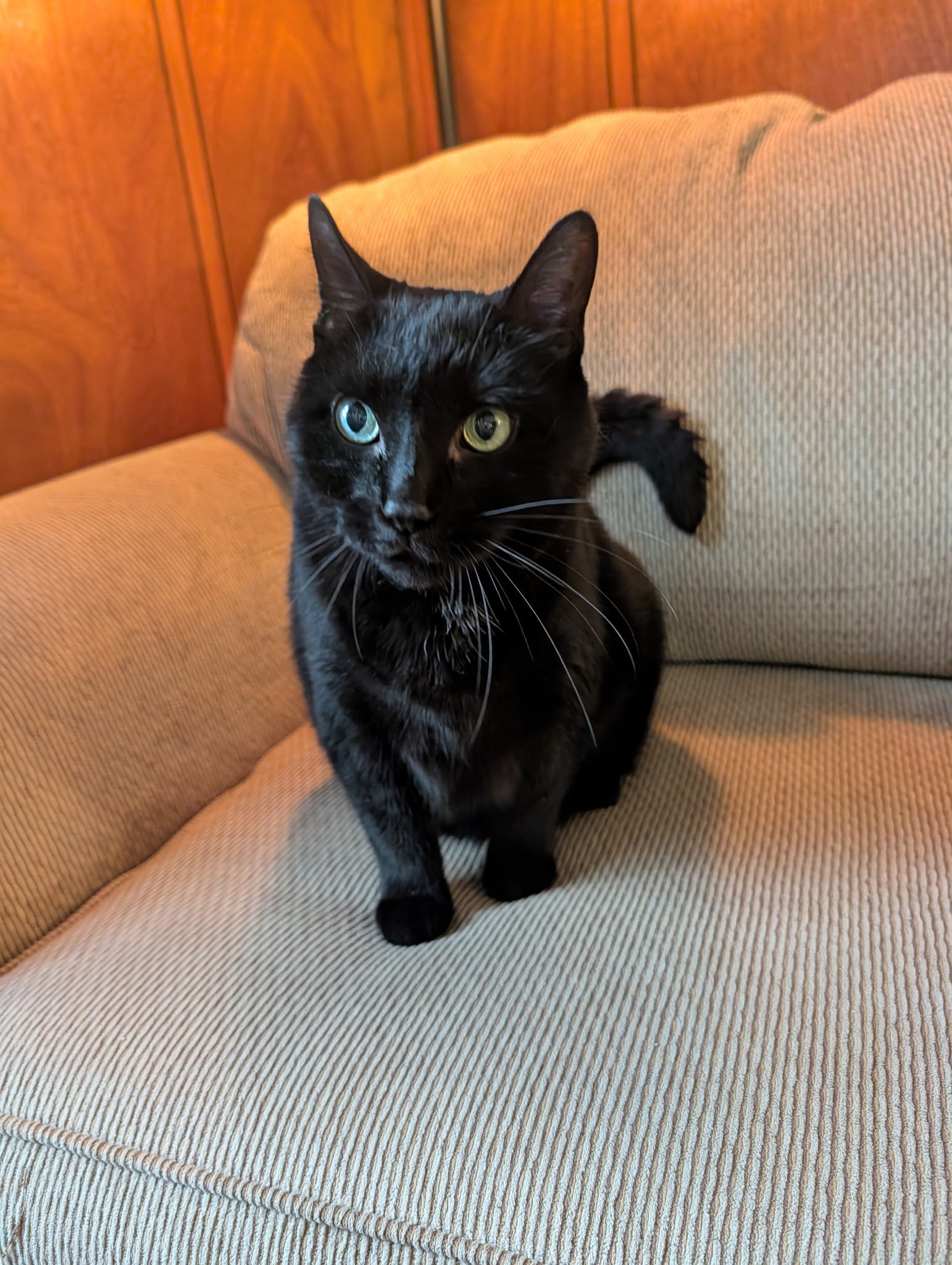
Raffi
InternNew to telehealth and occasionally convinced the client is trapped inside the monitor, a problem he resolves by attacking the screen. Practices therapurrutic sound healing at microphone volume.
If any of that sounded right, let's talk.
A free fifteen-minute call is enough to find out whether this is the right fit. If it isn't, you'll leave with somewhere else to try.